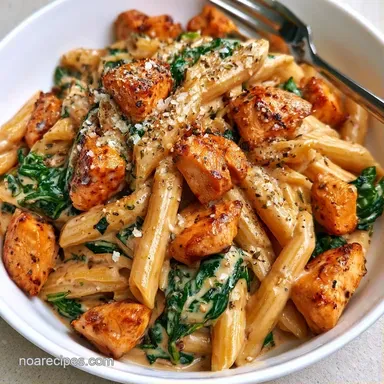
Creamy Spinach Quick 30-Minute Weeknight Pasta

- Time: 10 min active + 20 min cooking
- Texture: Creamy and glossy
- Serve with: Garlic bread or a crisp green salad
Quick 30-Minute Weeknight Pasta
Ever wonder why restaurant pasta sauce actually clings to the noodle instead of pooling at the bottom of the plate? It isn't just about the amount of cream. There is a simple trick involving the pasta water that changes the whole texture.
You can get that same result at home with a few simple moves. This quick 30-minute weeknight pasta is a great choice for those nights when you're exhausted but want something that feels a bit fancy.
Expect a rich garlic sauce, tender chicken, and a pop of brightness from lemon. Making a quick 30-minute weeknight pasta allows you to have a bistro-style meal with minimal cleanup.
Why This Method Works
- Pasta Water: The starch in the water acts like a glue. It helps the cream and cheese bind together so the sauce doesn't break.
- Searing First: Browning the chicken at high heat adds a savory depth that you just don't get from simmering it in the sauce.
Ingredients and Swaps
Before we get into the list, here is a look at why these specific items matter for the final result.
| Component | Purpose | Substitute Notes |
|---|---|---|
| Heavy Cream | Base of the sauce | Full-fat coconut milk: Similar fat but adds coconut flavor |
| Parmesan | Thickness and salt | Pecorino: Saltier and sharper profile |
| Lemon Juice | Cuts through richness | White wine vinegar: More acidic and sharp |
| Pasta Water | Emulsifies sauce | None: Essential for the texture |
- 1 lb boneless skinless chicken breast, cubed Why this? Lean and cooks fast.
- 2 tbsp olive oil
- 4 cloves garlic, minced
- 2 cups fresh baby spinach
- 1 cup heavy cream
- 3/4 cup grated Parmesan cheese
- 1/2 cup reserved pasta water
- 1 tbsp unsalted butter
- 1/2 tsp salt
- 1/4 tsp cracked black pepper
- 1 tsp lemon juice
- 1 lb fettuccine or penne pasta
Tools You'll Need
You only need a few basic items. A large pot for the pasta and a 12-inch skillet are the essentials. I also suggest using a whisk to keep the sauce smooth and tongs for tossing the noodles.
Key Cooking Steps
1. The Prep and Boil
Bring a large pot of salted water to a rolling boil. Add 1 lb pasta and cook for 1-2 minutes less than the package directions for al dente. Note: This ensures the pasta finishes cooking in the sauce. Before draining, reserve 1/2 cup of the cloudy pasta water, then drain the pasta.
2. Searing the Protein
While the pasta boils, heat 2 tbsp olive oil in a 12-inch skillet over medium-high heat. Add 1 lb cubed chicken and sear until the edges are deep golden brown and the thickest part hits 165°F (74°C). You can verify this temperature using USDA safety basics. Remove the chicken from the pan and set aside on a plate.

3. Building the Emulsion
Reduce the skillet heat to medium and melt 1 tbsp unsalted butter. Add 4 cloves minced garlic and sauté for 1 minute until fragrant but not brown. Pour in 1 cup heavy cream and bring to a gentle simmer for 2-3 minutes.
4. The Final Toss
Stir in 3/4 cup grated Parmesan cheese and 1/2 cup reserved pasta water, whisking constantly until the sauce is smooth and velvety. Fold in 2 cups fresh baby spinach until just wilted. Return the seared chicken to the pan and add the cooked pasta.
Toss everything over medium heat for 60 seconds until the sauce coats every noodle. Finish by stirring in 1 tsp lemon juice, 1/2 tsp salt, and 1/4 tsp cracked black pepper.

What Can Go Wrong
If your sauce looks a bit off, it is usually a temperature or timing issue. The most common problem is the sauce breaking, which happens when the fats separate from the liquid. This usually occurs if the skillet is too hot when you add the cheese.
Another issue is the pasta absorbing the sauce too quickly, leaving the dish dry. This happens if the pasta is overcooked in the pot, making it act like a sponge.
Fixing an Oily Sauce
If you see beads of oil on top, whisk in an extra tablespoon of warm pasta water or a splash of cream over low heat. This helps re-bind the emulsion.
Handling Mushy Noodles
If the pasta is too soft, it won't hold onto the sauce. Next time, drain the pasta while it still has a slight bite to it.
Thinning a Thick Sauce
If the sauce is too heavy, add a teaspoon of water at a time until it reaches a pourable consistency.
| Problem | Root Cause | Solution |
|---|---|---|
| Sauce separates | Heat too high during cheese addition | Whisk in warm pasta water on low heat |
| Pasta is mushy | Overcooked in boiling water | Drain 2 minutes earlier next time |
| Sauce is too thick | Pasta absorbed too much liquid | Stir in small splashes of water or milk |
Dietary Adaptations
For a gluten-free option, use a brown rice or corn-based pasta. Note that gluten-free pasta releases different starches, so you might need an extra splash of water to get the sauce to stick.
If you're serving this for a crowd, it pairs well with a toasted slice of Sourdough Sandwich Bread to mop up any remaining garlic cream.
Storage and Freshness
Store leftover quick 30-minute weeknight pasta in a sealed container in the refrigerator for 3 to 4 days, as per USDA FSIS guidelines.
When reheating, the pasta will have absorbed most of the sauce. Heat it in a pan over medium-low or in the microwave, adding a splash of milk or water to loosen the sauce. Ensure it is reheated to 165°F (74°C) for safety.
When reheating cooked leftovers, check with a food thermometer that the center reaches 165°F (74°C); the appliance temperature and time alone do not confirm this.
I don't recommend freezing this dish. Cream-based sauces often separate and become grainy when thawed.
Serving Suggestions

Because this dish is quite indulgent, I recommend pairing it with something refreshing. A crisp arugula salad tossed in lemon juice helps cut through the rich cream. Alternatively, steamed broccoli or roasted asparagus make for a heartier accompaniment.
Since this is a one-pan meal, keep the plating uncomplicated. Serve it in shallow bowls and garnish with a sprinkle of fresh parsley or a pinch of black pepper.
Questions Readers Ask
Can this really be made in 30 minutes?
Yes, it takes about 30 minutes. The pasta boils while you sear the chicken and simmer the sauce to maximize efficiency.
How to prevent the chicken from becoming rubbery?
Sear the cubed chicken over medium-high heat until the edges are deep golden brown. Remove it from the pan immediately once it reaches 165°F.
What creates the velvety sauce texture?
Whisk the grated Parmesan and reserved pasta water constantly into the simmering cream. This emulsion ensures a smooth and cohesive consistency.
Is it true I can use pre-shredded Parmesan cheese from a bag?
This one's false: pre-shredded cheese contains anti-clumping agents that prevent it from melting smoothly. Grating your own cheese usually gives a smoother melt.
Could a different pasta shape replace the fettuccine?
Yes, penne is an excellent alternative. Any short or long pasta works well with this specific cream sauce.
Why is freezing this dish not recommended?
The cream-based sauce often separates and becomes grainy when thawed. It is best to store leftovers in a sealed container in the refrigerator for 3 to 4 days.
Which method prevents leftovers from becoming a "pasta brick"?
Add a splash of water before reheating to loosen the sauce. Heat the pasta in a pan over medium-low or in the microwave until it reaches 165°F.
Quick 30-Minute Weeknight Pasta