Mango Sticky Rice: Authentic Thai Style

- Time: 10 min active + 4 hrs 40 min soaking/resting = Total 4 hrs 50 mins
- Flavor/Texture Hook: Velvety coconut cream paired with chewy, sweet grains and juicy fruit
- Perfect for: A joyful homemade dessert to impress guests or a special weekend treat
That sweet, tropical scent hitting you the second you crack open a ripe mango is just unmatched. I remember the first time I tried to make this at home, I completely ignored the soaking step.
I thought, "It's just rice, how hard can it be?" I ended up with something that had the texture of wet pebbles, and I almost gave up on the whole thing.
But once I slowed down and actually followed the traditional method, everything changed. The way the hot rice absorbs the coconut milk is almost hypnotic, and the result is a dessert that feels like a hug in a bowl. It's a joyful process that turns a few simple ingredients into something that tastes like a vacation.
This guide is all about making an easy mango sticky rice without needing a professional kitchen. We're focusing on foolproof steps and minimal tools, so you can get that authentic Thai sweet rice and mango experience right in your own home. Trust me, the wait for the soak is totally worth the payoff.
Nailing Your Mango Sticky Rice
If you want this to work, you have to respect the grain. Most people try to use jasmine rice or sushi rice, but those won't give you the right pull. You need glutinous rice, also known as sweet rice. The magic happens when the rice is steamed rather than boiled, which keeps the grains intact while making them tender.
I've found that the secret to the most velvety texture is adding the coconut syrup while the rice is still steaming hot. If the rice cools down, the syrup just sits on the outside instead of penetrating the core of the grain. It's a quick window of time, so have your sauce ready to go the moment the steamer opens.
For the mangoes, go for the ripest ones you can find. They should give slightly when you press them and smell like a tropical paradise. If they're too firm, the contrast with the creamy rice is lost. You want that fruit to almost melt into the coconut sauce on your plate.
The Grain Secret: Glutinous rice is packed with amylopectin, which is a type of starch that creates that signature sticky, chewy texture. According to the experts at Serious Eats, this is what differentiates it from long grain varieties.
Sugar Absorption: The sugar in the coconut milk acts as a humectant, drawing moisture into the rice and keeping it soft for longer.
Fat Coating: The fats in the full fat coconut milk coat each individual grain, preventing them from clumping into one giant mass.
Temperature Shock: Mixing hot syrup with hot rice creates a vacuum effect, pulling the flavors deep into the starch.
| Method | Time | Texture | Best For |
|---|---|---|---|
| Bamboo Steamer | Long | Chewy and distinct | Authentic results |
| Rice Cooker | Medium | Softer and denser | Quick wins |
| Microwave | Short | Variable/Mushy | Absolute emergencies |
Right then, let's look at what's actually happening inside your pot. It's not just cooking; it's a bit of a textural transformation.
| Ingredient | Science Role | Pro Secret |
|---|---|---|
| Glutinous Rice | Structure | Rinse until water is crystal clear |
| Coconut Milk | Emulsion | Use full fat for the velvety mouthfeel |
| Coconut Sugar | Flavor Depth | Adds a caramel note compared to white sugar |
| Fine Sea Salt | Contrast | Cuts through the richness of the coconut |
The Shopping List
When picking your ingredients, don't settle for low-fat options. This is a treat, and the fat in the coconut milk is what carries all the flavor. If you can find Thai grown mangoes like Nam Dok Mai, grab them, but any honey mango will do the trick.
For the Sticky Rice
- 1.5 cups (300g) glutinous sweet rice Why this? Necessary for the specific chewy texture
- 2 cups (480ml) water Why this? For the initial soak
- 0.5 tsp (3g) fine sea salt Why this? Balances the sweetness of the coconut
- Substitute: Arborio rice (Note: Result is denser and less "stretchy")
For the Coconut Sauce
- 1 cup (240ml) full fat coconut milk Why this? Provides the creamy, rich base
- 1/3 cup (65g) coconut sugar Why this? Deeper, earthier sweetness than cane sugar
- 0.5 tsp (3g) fine sea salt Why this? Prevents the sauce from tasting flat
- Substitute: Brown sugar (Note: Less tropical flavor, more molasses)
For the Fresh Finish
- 3 large (680g) ripe mangoes, peeled and sliced Why this? Adds the essential acidic brightness
- 1 tbsp (8g) toasted sesame seeds Why this? Adds a nutty crunch and visual pop
- 1/4 cup (60ml) thick coconut cream Why this? Used for the final velvety drizzle
- Substitute: Toasted mung beans (Note: More traditional Thai crunch)
Essential Kitchen Gear
You don't need a mountain of equipment to make homemade mango sticky rice. If you don't have a bamboo steamer, a mesh strainer over a pot of boiling water works just as well. Just make sure the water doesn't actually touch the rice, or you'll end up with porridge.
I recommend using a wide mixing bowl for the final stage. You need enough room to fold the coconut syrup into the rice without smashing the grains. A silicone spatula is your best friend here, as it allows you to be gentle with the rice.
Finally,, a sharp knife is non negotiable for the mangoes. You want clean, sleek slices that look professional on the plate. If the knife is dull, you'll end up bruising the fruit, which ruins the presentation.
The step-by-step Process
Let's crack on with the actual cooking. Remember, the soaking is the most important part, so don't try to shortcut it.
- Rinse the glutinous rice under cold water 3-4 times until the water runs clear to remove excess surface starch. Note: This prevents the rice from becoming an oversized glue ball.
- Soak the rice in a bowl of fresh water for at least 4 hours (preferably overnight), then drain thoroughly using a colander.
- Line a bamboo steamer with cheesecloth or place the rice in a mesh strainer. Steam over boiling water for 20-25 minutes, gently fluffing the rice with a fork every 10 minutes until the grains are translucent and tender.
- While the rice steams, whisk coconut milk, coconut sugar, and salt in a small saucepan over medium heat until the sugar dissolves and the mixture is fragrant. Note: Do not let it boil, or the coconut milk might separate.
- Immediately fold the hot coconut syrup into the hot steamed rice in a mixing bowl.
- Cover the bowl and let the rice rest for 20 minutes until the liquid is fully absorbed and the rice looks glossy.
- Slice the ripe mangoes into wedges.
- Plate a portion of the coconut rice alongside the mango slices, drizzle with the reserved thick coconut cream, and garnish with toasted sesame seeds.
Chef's Tip: To get the sesame seeds extra fragrant, toss them in a dry pan over medium heat for 2 minutes. You'll hear a slight sizzle and smell a nutty aroma just before they turn golden.
Common Fixes and Problems

Even with a foolproof method, things can go sideways. Usually, it comes down to the water ratio or the ripeness of the fruit. If your rice feels too hard, you likely didn't soak it long enough. The water needs time to penetrate the center of the grain.
Why Your Rice Is Mushy
This usually happens if the rice was boiled instead of steamed, or if you stirred it too aggressively. The grains break and release too much starch, creating a paste.
Why Your Rice Is Dry
If the rice didn't absorb the syrup, it's probably because the rice had cooled down too much before you added the sauce. The temperature difference prevents the "vacuum" effect we want.
Handling Unripe Mangoes
If your mangoes are a bit too tart, you can toss the slices in a tiny bit of honey or maple syrup before plating. It helps mimic the sweetness of a fully ripe fruit.
| Problem | Root Cause | Solution |
|---|---|---|
| Rice is too hard | Insufficient soaking | Soak for at least 4 hours or overnight |
| Sauce is oily | Boiled coconut milk | Heat gently; do not let it reach a rolling boil |
| Mango is sour | Underripe fruit | Drizzle with a bit of honey or syrup |
The Quality Checklist:
- ✓ Rice is glossy and translucent, not white and opaque.
- ✓ Mangoes are soft to the touch and fragrant.
- ✓ Coconut sauce is velvety and fully incorporated.
- ✓ Sesame seeds are golden brown and fragrant.
Creative Flavor Twists
Once you've nailed the basic Thai mango sticky rice, you can start playing with the flavors. I love adding a drop of pandan extract to the coconut milk. It gives the rice a gorgeous green tint and a vanilla like aroma that pairs perfectly with the mango.
If you've just finished a savory dinner, like my black pepper chicken, this dessert is the ultimate way to cleanse the palate. The sweetness cuts right through the heat of the pepper.
For those who want a more complex flavor, try using black glutinous rice. It has a nuttier, earthier taste and a deep purple color that looks stunning against the bright yellow mango. If you're looking for more Asian inspired dishes to round out your menu, my and Mushroom Stir Fry recipe is a great light starter to serve before this rich dessert.
Decision Shortcut:
- If you want more nuttiness → Use black glutinous rice.
- If you want a floral aroma → Infuse the coconut milk with pandan leaves.
- If you want it vegan → This recipe is already vegan friendly!
Adjusting Your Batch Size
Scaling this recipe is pretty straightforward, but you can't just multiply everything linearly without a few tweaks. The rice behaves differently in larger volumes, especially when steaming.
Scaling Down (½ batch): Use a smaller steamer basket to ensure the rice doesn't spread too thin and dry out. Reduce the steaming time by about 5 minutes, but always check for that translucent look.
Since you're using half an egg's worth of volume (if adding binders), just measure your liquids carefully.
Scaling Up (2x - 4x): Don't quadruple the salt and sugar; start at 1.5x and taste as you go. Coconut sugar can be quite potent in large quantities. When steaming, work in batches or use multiple steamer tiers, as overloading the basket will lead to uneven cooking, the bottom will be mushy while the top stays hard.
If you're making a massive batch for a party, let the rice rest for an extra 10 minutes. The larger mass holds heat longer, which means the coconut syrup takes a bit more time to migrate to the center of the pile.
Myths About Sticky Rice
There's a lot of misinformation out there about this dish. One of the biggest is that you can use any "sticky" rice. In reality, "sticky rice" as a category includes many grains, but only glutinous rice provides the specific chew needed for an authentic mango sticky rice recipe.
Another myth is that you should boil the coconut milk to "infuse" the sugar. Actually, boiling can cause the coconut fats to separate, leaving you with a greasy sauce instead of a velvety one. Keep it at a gentle simmer.
Some people think you should add the mango to the rice while it's cooking. Absolutely not. The heat will turn the mango into a soggy mess. Always keep the fruit fresh and cold to provide a temperature contrast with the warm rice.
Storage and Waste Tips
If you have leftovers, keep the rice and the mango separate. The rice will stay good in the fridge for about 3 days. However, it will harden as it cools because the starches retrograde.
To bring it back to life, steam it again for 5 minutes or microwave it with a splash of water and a damp paper towel over the top.
The coconut cream drizzle is best used fresh, but it can be stored in an airtight container for 48 hours. If you see it separate, just give it a quick whisk or a shake.
Zero Waste Tips:
- Mango Skins: Don't toss them! You can blend the skins (if organic) into a smoothie or use them to infuse a simple syrup for cocktails.
- Coconut Milk Cans: If you have a bit left in the can, freeze it in ice cube trays. These "coconut cubes" are great for adding creaminess to morning coffee or oatmeal.
- Leftover Rice: If you have a small amount of coconut rice left, fry it in a pan with a bit of butter and a pinch of salt for a sweet breakfast treat.
Plating for Visuals
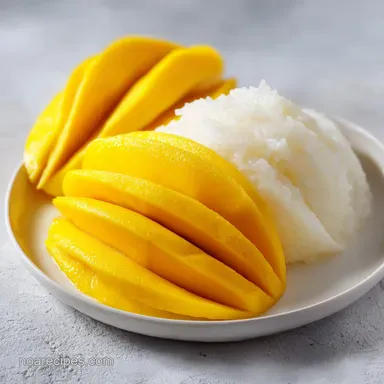
The beauty of this dish is in the contrast of colors. I like to use a flat, white plate to make the yellow of the mango and the white of the rice really pop. Instead of just piling the rice, use a small ramekin to mold the rice into a neat circle.
Place the mango slices in a fan shape leaning against the rice. This creates height and makes the dish look more like something you'd find in a high end Bangkok cafe.
For the final touch, drizzle the thick coconut cream in a thin, zig zag pattern across both the rice and the fruit. Sprinkle the toasted sesame seeds from a height to ensure they're evenly distributed. It's these small, joyful details that turn a simple homemade mango sticky rice into a showstopper.
Recipe FAQs
What makes mango sticky rice unique?
The use of glutinous rice and coconut syrup. The rice absorbs a mixture of coconut milk, coconut sugar, and salt, creating a chewy, sweet texture that complements the fresh mango.
Is sticky rice suitable for people with diabetes?
No, it is generally not recommended. Glutinous rice and coconut sugar have a high glycemic index, which can cause rapid spikes in blood sugar levels.
Is mango sticky rice healthy to eat?
It is best enjoyed in moderation. While it contains fruit and coconut, the high sugar content and calorie count of 406 kcal per serving make it a dessert rather than a health food.
What gives mango sticky rice its flavor?
A combination of coconut milk, coconut sugar, and salt. This syrup is whisked over medium heat and folded into hot steamed rice to create the signature creamy sweetness.
How to reheat leftover sticky rice?
Steam the rice for 5 minutes. Alternatively, microwave it with a splash of water and a damp paper towel over the top to restore the moisture.
Is it true that any white rice can be used for this recipe?
No, this is a common misconception. You must use glutinous sweet rice to achieve the necessary sticky, chewy consistency; regular long-grain rice will remain separate and grainy.
How to ensure the rice does not become too mushy?
Rinse the glutinous rice 3–4 times until the water runs clear. This removes the excess surface starch that otherwise causes the grains to clump or become overly gummy.
Mango Sticky Rice with Coconut Milk