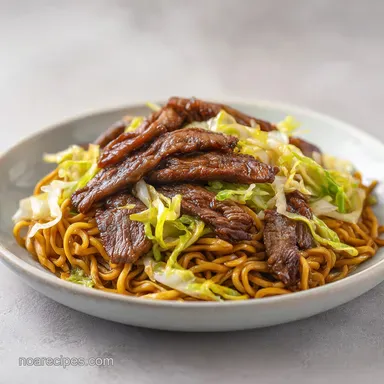
Beef Pan Fried Noodles: Crispy and Charred

- Time:15 minutes prep + 15 minutes cook = Total 30 minutes
- Flavor/Texture Hook: Velvety beef with shatter crisp charred noodle patches
- Perfect for: Stress free weeknight dinners that feel like takeout
- Beef Pan Fried Noodles
- Reasons This Method Works
- Essential Recipe Specs
- The Core Components
- Necessary Kitchen Gear
- Step-by-Step Cooking Process
- Fixing Common Cooking Issues
- Flavor Twists and Swaps
- Adjusting the Serving Size
- Debunking Kitchen Myths
- Storage and Zero Waste
- Ideal Side Dish Pairings
- Critical in Sodium
- Recipe FAQs
- 📝 Recipe Card
Beef pan fried Noodles
That sound of the noodles hitting the hot oil a loud, aggressive sizzle is exactly where the magic happens. I used to just toss everything together in a big pot, thinking that "stir fry" meant constant moving. The result?
A sad, mushy pile of pale noodles and grey beef that tasted like it had been steamed in a gym sock. It was frustrating because the flavors were there, but the texture was just wrong.
The secret I stumbled upon was the "press and wait" method. Instead of stirring, you actually flatten the noodles against the pan and leave them alone. This creates those gorgeous, golden brown charred patches that give this recipe its soul.
It transforms the dish from a basic stir fry into something with a real bite to it.
If you're tired of takeout that arrives lukewarm and limp, this is the fix. We're going to get the beef velvety and the noodles crispy, all while keeping the budget in check by using accessible cuts and hearty vegetables. It's a straightforward process, but the difference in the final result is night and day.
Reasons This Method Works
- Starch Barrier: The cornstarch in the marinade creates a thin layer around the beef. This keeps the juices inside and prevents the meat from toughening up under high heat.
- Controlled Char: By pressing the noodles down and not moving them, you create direct contact with the metal. This lets the natural sugars in the egg noodles brown and crisp up.
- Sequence Cooking: Removing the beef before the vegetables prevents overcooking. If you left the beef in, it would turn into rubber by the time the carrots were soft.
- Glaze Reduction: Adding the sauce at the very end over high heat causes the water to evaporate almost instantly. This leaves a thick, glossy coating that clings to the noodles rather than pooling at the bottom.
| Noodle Choice | Prep Time | Texture | Best For |
|---|---|---|---|
| Fresh Egg Noodles | 5 mins | Soft, chewy | Quick meals |
| Pre boiled/Dried | 15 mins | Firmer, crispier | Maximum char |
| Rice Noodles | 10 mins | Silky, light | gluten-free needs |
Essential Recipe Specs
Right then, let's look at what's happening under the hood. To get that professional texture without the professional gear, we rely on a few key interactions. For instance, the way the cornstarch reacts with the soy sauce is what creates that "velvety" feel you get in Chinese restaurants. According to Serious Eats, this technique, known as velveting, is essential for keeping lean meats tender during over high heat cooking.
I've found that using a cast iron skillet is a total win here because it holds heat way better than a thin non stick pan. If your pan cools down the second the noodles hit it, you'll get steaming instead of frying. That's the difference between a soggy noodle and a crispy one.
Honestly, don't even bother with low-fat oils; you need something that can handle the heat without smoking.
Since we're going for a budget smart approach, sirloin is our go to. It's a great balance of flavor and cost. If you're really pinching pennies, you can use flank steak, but you'll need to be even more careful about slicing against the grain to avoid a chewy result. You can check the USDA FoodData for different beef cuts to see how fat content affects the final tenderness.
The Core Components
When it comes to the ingredients, we're keeping it simple but strategic. The goal is a balance of salty, sweet, and umami. The oyster sauce provides that deep, savory base, while the brown sugar cuts through the saltiness of the soy.
Component Analysis
| Ingredient | Science Role | Pro Secret |
|---|---|---|
| Cornstarch | Texture Modifier | Use exactly 1 tbsp to avoid a "slimy" coating |
| Brown Sugar | Caramelization | Adds a deep molasses note compared to white sugar |
| Oyster Sauce | Umami Base | The "secret" to that restaurant style savory depth |
| Chinese Egg Noodles | Structural Base | Pre boiling them removes excess surface starch |
Ingredients & Substitutes
- 1 lb sirloin steak, thinly slicedWhy this? Tender enough for quick searing without breaking the bank.
- Substitute: Flank steak (Note: Needs thinner slices and a longer marinade for tenderness)
- 1 tbsp soy sauce (for marinade)Why this? Adds initial salt and color to the meat.
- Substitute: Tamari (Note: gluten-free option with a slightly richer taste)
- 1 tbsp cornstarchWhy this? Creates the velvet texture.
- Substitute: Potato starch (Note: Provides an even crispier exterior)
- 1 tsp toasted sesame oilWhy this? Adds a nutty aroma that permeates the beef.
- Substitute: Peanut oil (Note: Lacks the toasted aroma but works for fat)
- 1 clove garlic, mincedWhy this? Essential aromatic base.
- Substitute: Garlic powder (Note: Use 1/4 tsp; loses the fresh punch)
- 2 cups shredded cabbageWhy this? Cheap filler that adds a great crunch.
- Substitute: Bok choy (Note: More watery, requires slightly longer cooking)
- 1 cup sliced carrotsWhy this? Adds sweetness and a pop of color.
- Substitute: Red bell pepper (Note: Sweeter and softer than carrots)
- 1 medium yellow onion, slicedWhy this? Foundational savory flavor.
- Substitute: Shallots (Note: Milder, more refined onion taste)
- 2 tbsp neutral oilWhy this? High smoke point for searing.
- Substitute: Grapeseed oil (Note: Excellent over high heat stability)
- 1/4 cup oyster sauceWhy this? The primary savory agent.
- Substitute: Hoisin sauce (Note: Much sweeter, reduce brown sugar by half)
- 2 tbsp soy sauce (for sauce)Why this? Balances the sweetness of the oyster sauce.
- Substitute: Liquid aminos (Note: Saltier, use slightly less)
- 1 tbsp brown sugarWhy this? Helps the sauce glaze and stick.
- Substitute: Honey (Note: Stickier finish, adds a floral note)
- 1 tsp grated fresh gingerWhy this? Adds a zesty, fresh contrast.
- Substitute: Ground ginger (Note: Use 1/2 tsp; lacks the sharp "bite")
- 1 tbsp waterWhy this? Thins the sauce just enough to coat everything.
- Substitute: Beef broth (Note: Deepens the flavor profile)
- 1 lb Chinese egg noodles, pre boiled and drainedWhy this? Provides the bulk and the char.
- Substitute: Spaghetti (Note: Use al dente; lacks the egg rich flavor)
Necessary Kitchen Gear
You don't need a professional kitchen to make Beef pan fried Noodles, but a few tools make it stress free. If you have a wok, great. If not, a heavy cast iron skillet is actually my preference. It holds onto the heat far better than stainless steel, which means your noodles won't just steam when they hit the pan.
For the beef, a very sharp chef's knife is non negotiable. You want slices that are almost translucent. If the beef is too thick, the outside will burn before the inside is cooked, and you'll lose that velvety texture.
I usually put the steak in the freezer for about 15 minutes before slicing, it firms up the meat and makes getting those thin ribbons way easier.
Finally,, a sturdy silicone spatula or a wooden turner is key. You'll be pressing the noodles down firmly, and you don't want to scratch your pan or struggle with a flimsy tool. A wide spatula allows you to flatten more of the noodle surface area at once, giving you more of those crispy bits.
Step-by-step Cooking Process
Let's crack on. The most important thing here is the timing. Have all your ingredients measured and ready in bowls before you turn on the stove. Stir frying happens fast, and you don't want to be chopping carrots while your beef is burning.
Prep and Velveting
- Combine the sliced beef with 1 tbsp soy sauce, 1 tbsp cornstarch, 1 tsp sesame oil, and minced garlic in a bowl. Note: Mix until the cornstarch forms a thin paste around the meat. Let marinate for 10 minutes.
The over High heat Beef Sear
- Heat 1 tbsp of neutral oil in a cast iron skillet or wok until shimmering. Add beef in a single layer and sear undisturbed for 2 minutes until a brown crust forms, then toss and cook for 1 more minute. Remove beef from pan and set aside on a plate.
The Vegetable Wilt
- In the same pan, add onion, carrots, and cabbage. Stir fry over medium high heat for 3-4 minutes until vegetables are translucent and slightly charred.
The Pan Fry Finish
- Push vegetables to the side of the pan. Add 2 tbsp of neutral oil to the center and add the drained noodles. Press down with a spatula and fry undisturbed for 2-3 minutes until golden brown charred patches form.
The Final Integration
- Return the beef and any juices on the plate to the pan. Pour in the mixture of oyster sauce, soy sauce, brown sugar, ginger, and water. Toss rapidly on high heat for 60 seconds until the sauce thickens into a glossy glaze.
Chef's Note: If you notice the pan getting too dry during the noodle frying stage, add another teaspoon of oil. The noodles need fat to "fry" rather than just "toast," which is how you get that shatter crisp texture.
Fixing Common Cooking Issues

The biggest struggle with Beef pan fried Noodles is usually texture. Most people end up with "stewed" noodles because they crowd the pan or stir too often. If you're seeing liquid pooling at the bottom of the pan, your heat is too low or you've added too many vegetables at once.
Why are my noodles soggy?
This usually happens because of two things: either the noodles weren't drained properly after boiling, or you stirred them too much. When you stir constantly, you prevent the noodles from developing a crust. You need that stillness to let the moisture evaporate and the sugars caramelize.
Why is the beef tough?
Tough beef is almost always a result of overcooking or slicing with the grain. Ensure you slice across the muscle fibers. Also, don't be afraid of the high heat, the beef should cook quickly. If it sits in the pan for 5-10 minutes, it'll turn into rubber.
The sauce is too thin/watery
If your sauce isn't glazing the noodles, it's likely because the pan wasn't hot enough when you added the liquid. The sauce needs to bubble and reduce almost instantly. If it's too thin, just keep tossing on high heat for another 30 seconds.
| Problem | Root Cause | Solution |
|---|---|---|
| Noodles sticking | Not enough oil | Add 1 tbsp oil before adding noodles |
| Beef is grey | Pan not hot enough | Wait for oil to shimmer/smoke slightly |
| Sauce tastes salty | Too much soy/oyster sauce | Add a pinch more brown sugar or a splash of water |
Common Mistakes Checklist
- ✓ Slicing beef across the grain for tenderness
- ✓ Draining noodles thoroughly to prevent steaming
- ✓ Allowing the beef to sear undisturbed for 2 mins
- ✓ Pressing noodles flat to create a charred crust
- ✓ Using a high smoke point oil to avoid burnt taste
Flavor Twists and Swaps
Once you've nailed the basic Beef pan fried Noodles, you can start playing with the profile. If you want something with more heat, I highly recommend adding a tablespoon of Chili Garlic Sauce or some Szechuan peppercorns to the marinade.
It gives the dish a numbing, spicy kick that cuts through the richness of the beef.
For a more aromatic version, try adding a handful of fresh Thai basil or cilantro at the very end. The residual heat will wilt the herbs just enough to release their oils without losing the bright green color. If you're looking for more greens, this pairs wonderfully with my and Mushroom Stir Fry recipe, which you can either serve on the side or toss directly into the pan with the other vegetables.
If you're avoiding gluten, you can swap the egg noodles for wide rice noodles and use Tamari instead of soy sauce. The texture will be silkier and less "crispy," but the flavor remains just as punchy. For a honey ginger profile, replace the brown sugar with honey and double the amount of fresh ginger.
This creates a stickier, more floral glaze that's a hit with kids.
Adjusting the Serving Size
Scaling this recipe is pretty simple, but you have to be careful with the pan space. The "Beef pan fried Noodles" rely on surface area for that char. If you double the recipe and dump it all in one pan, you'll end up with a giant pile of steamed noodles.
Cutting it in half (3 servings): Use a smaller skillet to keep the heat concentrated. You can reduce the cooking time for the vegetables by about 20%. For the marinade, just beat one egg if you're adding an egg fry element, or simply halve the cornstarch and soy.
Doubling it (12 servings): The most important rule here: work in batches. Sear the beef in two rounds, then do the noodles in two rounds. If you try to do it all at once, the pan temperature will drop, and you'll lose the crispiness.
When doubling, don't double the salt or soy sauce exactly, start with 1.5x and taste it. Liquids can concentrate differently in larger batches.
| Scale | Pan Strategy | Sauce Adjustment | Time Change |
|---|---|---|---|
| Half | Small Skillet | Exact Halves | -20% Veg time |
| Double | Two Batches | 1.5x Soy/Salt | Same per batch |
| Triple | Three Batches | 2x Soy/Salt | Same per batch |
Debunking Kitchen Myths
There's a common belief that you need a high pressure commercial wok to get "wok hei" (the breath of the wok). While those burners are incredible, a heavy cast iron pan on a home stove gets you 90% of the way there. The key isn't the equipment, it's the temperature and the lack of overcrowding.
Another myth is that searing the beef "locks in the juices." In reality, searing doesn't create a waterproof seal; it's actually about creating flavor through browning. The "velveting" with cornstarch is what actually preserves the moisture by creating a physical barrier, not the sear itself.
Finally, some people think you should boil the noodles until they are fully soft before frying. Trust me on this: undercook them slightly. They'll finish cooking in the pan, and this prevents them from becoming mushy when you add the sauce.
Storage and Zero Waste
If you have leftovers, store them in an airtight container in the fridge for up to 3 days. The noodles will absorb some of the sauce as they sit, so they might seem a bit drier when you first look at them.
To reheat, avoid the microwave if you can. The microwave makes the noodles rubbery. Instead, toss them back into a hot pan with a tiny splash of water or oil. This helps reactivate the glaze and brings back a bit of that original crispiness.
If you must use a microwave, cover the dish with a damp paper towel to keep the moisture in.
For zero waste, don't throw away the cabbage cores or carrot peels. I usually toss my vegetable scraps into a freezer bag. Once the bag is full, I simmer them with some water and a bay leaf to make a quick vegetable stock.
Also, any leftover marinade can be simmered in a separate pan for a few minutes until thickened and used as a glaze for roasted carrots or tofu.
Ideal Side Dish Pairings
Since this dish is quite rich and savory, you want sides that provide a fresh, acidic, or light contrast. A simple smashed cucumber salad with rice vinegar and sesame oil is the gold standard here. The coolness of the cucumbers balances the heat and salt of the noodles.
If you're feeding a family and want something more substantial, a side of steamed broccoli or snap peas works great. For those who love a bit of everything, my Broccoli in 20 Minutes recipe makes a great companion dish if you're hosting a larger gathering and want a variety of proteins on the table.
You could also serve this with a side of kimchi. The fermented funk and acidity of the kimchi cut right through the richness of the sirloin and the oyster sauce, cleansing your palate between bites. It turns a simple meal into a full on feast without adding much extra prep time.
Critical in Sodium
1280 mg 1280 mg of sodium per serving (56% 56% of daily value)
The American Heart Association recommends a daily limit of no more than 2,300 mg of sodium to maintain heart health and lower blood pressure.
Tips to Reduce Sodium
-
Swap Soy Sauce-20%
Replace regular soy sauce in both the marinade and the sauce with low-sodium soy sauce or coconut aminos for a significant reduction.
-
Modify Oyster Sauce-20%
Use a low-sodium oyster sauce alternative or reduce the amount and add a pinch of mushroom powder to maintain the umami flavor.
-
Switch Noodles-10%
Replace processed Chinese egg noodles with brown rice noodles or whole wheat noodles to avoid hidden sodium found in pre-processed pasta.
-
Boost Fresh Aromatics
Double the amount of fresh ginger and garlic, or add a squeeze of fresh lime juice to enhance the flavor profile without adding salt.
Recipe FAQs
What's the difference between lo mein and pan-fried noodles?
Pan-fried noodles are seared in oil to create charred, crispy patches. Lo mein focuses on tossing noodles in sauce without this specific searing step.
How to make fried noodles with beef?
Marinate sliced sirloin in soy sauce and cornstarch, then sear in a hot skillet. Stir-fry vegetables, fry pre-boiled noodles until golden, and toss everything together with a glossy glaze.
Should I boil noodles before frying?
Yes, use pre-boiled and drained noodles. This ensures they are cooked through before you sear them, preventing a raw center.
What’s the best cut of beef for this recipe?
Use thinly sliced sirloin steak. It provides the ideal balance of tenderness and quick-searing capability for high-heat cooking.
How long does Beef pan-fried Noodles last in the fridge?
Up to 3 days in an airtight container. To reheat, toss them in a hot pan with a splash of water to restore the crispiness.
Can I use rice noodles for Beef pan-fried Noodles?
No, stick with Chinese egg noodles. Rice noodles lack the structure needed for searing; for a different application of soft, sticky textures, try our mango sticky rice.
Is Beef pan-fried Noodles spicy?
No, it is not spicy. The flavor is defined by the savory and sweet combination of oyster sauce, soy sauce, and brown sugar.
Beef pan fried Noodles in 30 Minutes