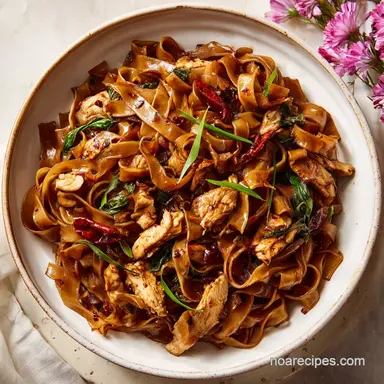
Drunken Noodles: Easy and Homemade

- Time:15 minutes prep + 10 minutes cook = Total 25 minutes
- Flavor/Texture Hook: Charred rice noodles with a spicy, peppery kick
- Perfect for: A stress free weeknight dinner that feels like a treat
- Authentic Drunken Noodles Recipe
- Secret to the Flavor
- Component Analysis
- Pantry Essentials
- Essential Kitchen Tools
- Step by Step Guide
- Fixing Common Errors
- Troubleshooting Common Issues
- Easy Ingredient Swaps
- Adjusting Portion Sizes
- Common Kitchen Myths
- Fridge and Freezer Tips
- Best Side Pairings
- Recipe FAQs
- 📝 Recipe Card
The first thing that hits you is the sizzle. That aggressive, over high heat pop of garlic and bird's eye chilies hitting the oil is the heartbeat of any Thai stir fry. I remember the first time I tried this in a small alley in Bangkok, the air thick with the scent of charred basil and soy.
It wasn't just a meal, it was a sensory overload.
In Thailand, this dish is known as Pad Kee Mao. The "drunken" part is a bit of a legend, some say it was designed to cure a hangover, others say it's so spicy you'd need a drink to handle it. For me, it's the ultimate comfort food because it's rustic and bold.
It's not about precision, it's about that smoky, scorched flavor that you can only get when the pan is screaming hot.
You're going to love how these Drunken Noodles come together in under half an hour. We're focusing on a budget smart approach here, using a few key pantry staples to get that authentic taste without needing a specialized grocery store for every single item.
It's a stress free way to bring a bit of that street market energy into your own kitchen.
Authentic Drunken Noodles Recipe
The secret to this dish isn't actually the alcohol, it's the heat. To get the right texture, you need the noodles to sear rather than steam. When you toss the wide rice noodles into the wok, you want to hear them crackle. If they just sit there and get soft, you've lost the magic.
Most people make the mistake of overcrowding the pan, which drops the temperature and leads to mushy noodles. I've learned the hard way that cooking in batches, or using a very large wok, is the only way to keep those noodles from turning into a sticky clump. It's all about the movement and the flame.
The balance of the sauce is where the personality comes in. We're using a mix of soy and fish sauce to hit those salty, umami notes, balanced by the earthy sweetness of coconut sugar. When that sauce hits the hot pan, it reduces almost instantly into a velvety glaze that clings to every single strand.
Secret to the Flavor
Since we're working with high temperatures, the "how" is just as important as the "what". Here's the logic behind the method:
- High Heat Char: Rapidly heating the noodles creates "wok hei", or the breath of the wok, which gives the dish its signature smoky taste according to Serious Eats.
- Sugar Caramelization: Coconut sugar has a lower melting point and a deeper flavor than white sugar, allowing it to brown and stick to the noodles quickly.
- Basil Timing: Thai basil contains volatile oils that disappear if cooked too long, so adding it at the very end keeps the aroma fresh and peppery.
- Starch Control: Using wide rice noodles provides a chewy, bouncy texture that can handle the weight of the sauce without breaking apart.
| Method | Time | Texture | Best For |
|---|---|---|---|
| Fast Stir fry | 10 mins | Charred & Chewy | Weeknight meals |
| Slow Simmer | 20 mins | Soft & Saucy | Beginner confidence |
| Traditional Wok | 8 mins | Smoky & Firm | Authentic experience |
Component Analysis
Understanding the role of each ingredient helps when you're trying to tweak the flavor to your liking.
| Ingredient | Science Role | Pro Secret |
|---|---|---|
| Dark Soy Sauce | Color and Depth | Use sparingly; it's mostly for that deep mahogany look |
| Fish Sauce | Umami Base | Don't fear the smell; it transforms into a salty richness |
| Thai Basil | Aromatic Finish | Don't swap for Italian basil; the anise flavor is key |
| Bird's Eye Chili | Heat Source | Deseed them for a milder kick without losing the flavor |
Pantry Essentials
For this Drunken Noodles version, we're keeping things simple and budget-friendly.
- 1/2 cup soy sauce Why this? Provides the primary salty base (Substitute: Tamari for gluten-free)
- 2 tbsp fish sauce Why this? Adds essential fermented depth (Substitute: Vegan fish sauce or extra soy + salt)
- 1 tbsp dark soy sauce Why this? Gives the noodles their dark color (Substitute: Regular soy + 1 tsp molasses)
- 1 tbsp coconut sugar Why this? Adds a caramel like sweetness (Substitute: Brown sugar)
- 1 tsp white pepper Why this? Earthy, floral heat different from chilies (Substitute: Black pepper)
- 1 lb chicken breast, thinly sliced Why this? Lean protein that cooks fast (Substitute: Tofu or shrimp)
- 2 cups red bell pepper, sliced Why this? Sweetness and color (Substitute: Carrots or snap peas)
- 1 cup carrots, julienned Why this? Adds a nice crunch (Substitute: Bok choy)
- 1 medium yellow onion, sliced Why this? Savory aromatic base (Substitute: Shallots)
- 3 tbsp neutral oil Why this? High smoke point for searing (Substitute: Canola or grapeseed oil)
- 5-6 cloves garlic, minced Why this? Pungent aromatic (Substitute: Garlic powder, though fresh is better)
- 3-5 bird's eye chilies, minced Why this? Authentic Thai heat (Substitute: Sliced jalapeño)
- 1 lb wide flat rice noodles Why this? Classic chewy texture (Substitute: Wide linguine, though texture differs)
- 1 cup packed fresh Thai basil leaves Why this? The defining herbal flavor (Substitute: Mix of basil and mint)
Essential Kitchen Tools
You don't need a professional kitchen, but a few things make this easier. A carbon steel wok is great, but a large stainless steel skillet or a non stick pan will work just fine for these Drunken Noodles.
I also recommend a sturdy spatula or tongs. You'll be tossing things quickly over high heat, and you need something that can move the noodles without breaking them. If you're using dry noodles, a large mixing bowl for soaking is a must.
Chef's Note: If your pan isn't getting hot enough, try heating your oil until it just starts to smoke. That's the signal that you're ready to sear the chicken.
Step by step Guide
Follow these steps to ensure your noodles stay firm and your sauce stays glossy.
- Prep the Sauce. Whisk the soy sauce, fish sauce, dark soy sauce, coconut sugar, and white pepper in a small bowl. Note: Dissolving the sugar now prevents grainy sauce later.
- Prepare Ingredients. Slice the chicken and vegetables uniformly. If using dry noodles, soak in warm water until pliable but firm.
- Sear the Protein. Heat 2 tbsp of oil in a wok until shimmering. Sear the sliced chicken breast until golden brown and just cooked through (about 3-4 mins). Remove the chicken and set aside.
- Sizzle Aromatics. Add the remaining 1 tbsp of oil. Toss in minced garlic and chilies, stirring for 30 seconds until they smell fragrant.
- Flash Cook Veggies. Add sliced onions, carrots, and bell peppers. Stir fry for 2 minutes until they are tender crisp.
- Combine Everything. Return the cooked chicken to the pan and add the wide rice noodles.
- Glaze the Noodles. Pour the prepared sauce over the mixture. Toss vigorously over high heat for 2-3 minutes until the sauce reduces into a velvety glaze and the noodles look charred.
- Final Touch. Fold in the Thai basil leaves at the very last second until just wilted.
| Original Ingredient | Substitute | Why It Works |
|---|---|---|
| Chicken Breast | Extra Firm Tofu | High protein. Note: Press tofu first to ensure it sears rather than steams |
| Coconut Sugar | Brown Sugar | Similar molasses notes. Note: Slightly less earthy than coconut sugar |
| Thai Basil | Italian Basil + Mint | Mimics the peppery, anise profile. Note: Use a 2:1 ratio of basil to mint |
Fixing Common Errors

The most common issue with Drunken Noodles is the texture. If the noodles are too wet, the whole dish feels like a soup instead of a stir fry.
Troubleshooting Common Issues
| Issue | Solution |
|---|---|
| Why Your Noodles Are Mushy | This usually happens because the noodles were over soaked or the pan wasn't hot enough. When the temperature drops, the noodles absorb the liquid and break down. Make sure the pan is shimmering before |
| Why the Sauce Is Pooling | Pooling happens when you add too much sauce or cook it for too short a time. The sauce needs to reduce and emulsify with the fats in the pan to create that sticky glaze. |
| Why the Basil Is Brown | If the basil is brown and limp, it was cooked too long. It should be added after the heat is practically off, relying on the residual heat of the noodles to wilt the leaves. |
Common Mistakes Checklist:
- ✓ Checked that the pan is shimmering before adding chicken
- ✓ Soaked noodles until pliable, not fully soft
- ✓ Prepped all vegetables before turning on the heat
- ✓ Added Thai basil at the very last second
- ✓ Reduced the sauce until it clings to the noodles
Easy Ingredient Swaps
If you're looking to change the profile of these Drunken Noodles, there are a few ways to do it. For a Drunken Noodles vegan version, swap the fish sauce for a pinch of salt and a splash of extra soy sauce, and use tofu or mushrooms instead of chicken.
If you want a Drunken Noodles Chinese style approach, you can increase the dark soy sauce and add a teaspoon of oyster sauce (or vegetarian mushroom sauce) for a thicker, saltier finish. This leans more toward the flavors found in Cantonese stir fries.
For those who can't handle the heat, just use one bird's eye chili or swap them entirely for red bell pepper strips. You'll still get the look, but with a mild heat profile. If you love the charred flavor but want a different protein, my Beef pan fried Noodles are a great alternative that uses a similar over high heat method.
Adjusting Portion Sizes
When you're cooking for a crowd or just yourself, you can't always just multiply everything by two.
Scaling Down (1-2 servings): Use a smaller skillet to keep the heat concentrated. Reduce the cook time for vegetables by about 20% since there's less volume to heat up. If the recipe calls for an egg (in some variations), beat one and use half.
Scaling Up (2x-4x): The biggest mistake here is crowding the pan. Work in batches. Sear the chicken in two groups, then remove. Sauté the vegetables in batches. Only combine everything at the final stage. Also, increase salt and spices to only 1.5x first, then taste and adjust.
Liquids can usually be reduced by 10% when doubling to prevent the dish from becoming too soupy.
| Goal | Adjustment | Result |
|---|---|---|
| More Smoky | Higher Heat | More char, faster cook time |
| More Sauce | +2 tbsp Soy | More liquid, less "charred" look |
| Extra Veggie | Add Bok Choy | More volume, higher nutrient density |
Common Kitchen Myths
There's a lot of talk about stir frying, but some of it is just noise. For example, some people think you need a professional wok burner to get "wok hei". While a 100,000 BTU burner helps, you can get a similar effect in a cast iron skillet by getting it ripping hot.
Another myth is that you should add the sauce as soon as the noodles hit the pan. In reality, you want to sear the noodles for a minute first. This creates a slight crust that prevents them from absorbing all the sauce immediately and becoming mushy.
Finally,, don't believe that "healthy" oils like extra virgin olive oil are great for this. They have a low smoke point and will burn, adding a bitter taste to your Drunken Noodles. Always stick to neutral oils like canola or grapeseed for over high heat cooking.
Fridge and Freezer Tips
Rice noodles are tricky because they tend to harden in the fridge. To store these, place them in an airtight container. They'll stay good for about 3-4 days in the fridge.
When reheating, don't just microwave them on high. Add a splash of water or a teaspoon of oil and steam them in a pan over medium heat. This re hydrates the starch and brings back the chewy texture. I wouldn't recommend freezing this dish, as the noodles often break down and become grainy upon thawing.
For zero waste, don't throw away the stems of the Thai basil or the ends of the bell peppers. Toss them into a freezer bag with other veggie scraps. Once the bag is full, simmer them with water to make a basic vegetable stock for your next soup.
Best Side Pairings
Since these Drunken Noodles are so bold and salty, you need something to cut through the richness. A crisp cucumber salad with rice vinegar and a pinch of sugar is the classic pairing. The acidity cleanses the palate between bites of the savory noodles.
If you're hosting a dinner, you can serve these alongside some steamed bok choy or a simple Thai omelet (Kai Jeow). For a full blown feast, these pair well with a side of Char Siu Noodles for a variety of textures and flavors.
To drink, something cold and slightly sweet works best. A Thai iced tea with condensed milk is a great contrast to the heat of the chilies. If you prefer something lighter, a chilled lemongrass tea or even a crisp lager helps balance the salt and spice of the meal.
Right then, you've got everything you need to crush these Drunken Noodles at home. Just remember: high heat, fast movement, and don't overcook that basil. Trust me on this, and you'll have a meal that tastes like it came straight from a Bangkok street cart. Let's crack on!
Recipe FAQs
Why are these called drunken noodles?
The name refers to the dish's intense spice and aromatic Thai basil. The heat level traditionally suggests a need for a drink to soothe the palate.
What is the difference between pad see ew and drunken noodles?
Drunken noodles are spicy, while pad see ew is savory. This recipe uses bird's eye chilies and Thai basil to create a heat profile not found in pad see ew.
What is the difference between Pad Thai and drunken noodles?
The noodles and flavor profiles are distinct. Drunken noodles use wide flat rice noodles and a savory soy-based sauce, unlike the thinner noodles and sweeter profile of Pad Thai.
What are the main ingredients in drunken noodles?
The dish features wide flat rice noodles, chicken breast, and a mix of red bell pepper, carrots, and yellow onion. These are seasoned with soy sauce, fish sauce, dark soy sauce, coconut sugar, white pepper, garlic, bird's eye chilies, and Thai basil.
How to keep the noodles from becoming mushy?
Soak dry noodles in warm water only until pliable but firm. Use a shimmering hot wok to ensure the noodles sear rather than absorb excess liquid.
Is it true that the sauce should remain liquid in the pan?
No, this is a common misconception. Toss the mixture over high heat for 2-3 minutes until the sauce reduces into a velvety glaze.
Why is the Thai basil turning brown?
The basil was cooked for too long. Fold the leaves in at the very last second until they are just wilted to maintain their color and flavor.
Drunken Noodles in 25 Minutes